In today’s digital marketing world, terms like “email marketing” and “marketing automation” are often used interchangeably — but they’re not the same. Understanding their differences is crucial for choosing the right strategy and tools, especially in 2025 when personalization, customer journey mapping, and ROI measurement are more important than ever.
What Is Email Marketing?

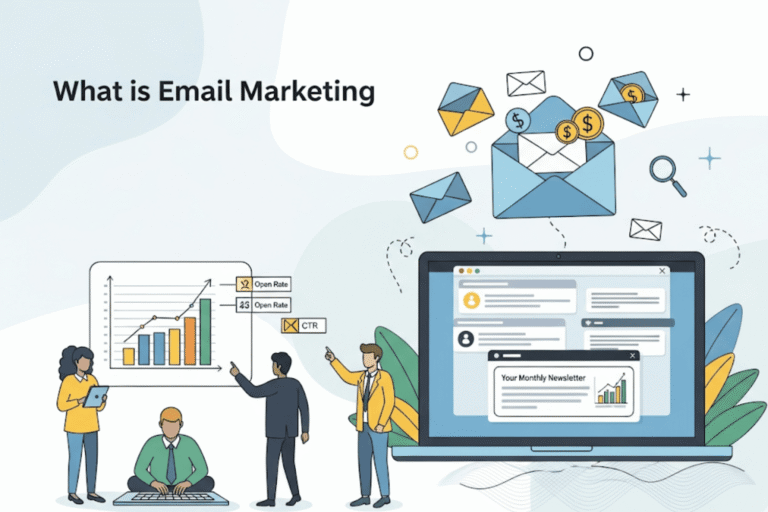
Email marketing refers to sending emails (newsletters, promotional offers, updates) to a group of people (subscribers) with the goal of building relationships, driving engagement, encouraging sales, or retention.
Characteristics:
- Usually manual or semi-manual
- Involves creating email campaigns (e.g. newsletter, promotions)
- Targeted by simpler segments (demographics, purchase history)
- Key metrics: open rate, click-through rate (CTR), unsubscribe rate
Example: If you own an online store and send a monthly newsletter with new product releases and seasonal discounts, that’s email marketing.
If you want to learn about top 10 email marketing tools, read this article.
What Is Marketing Automation?

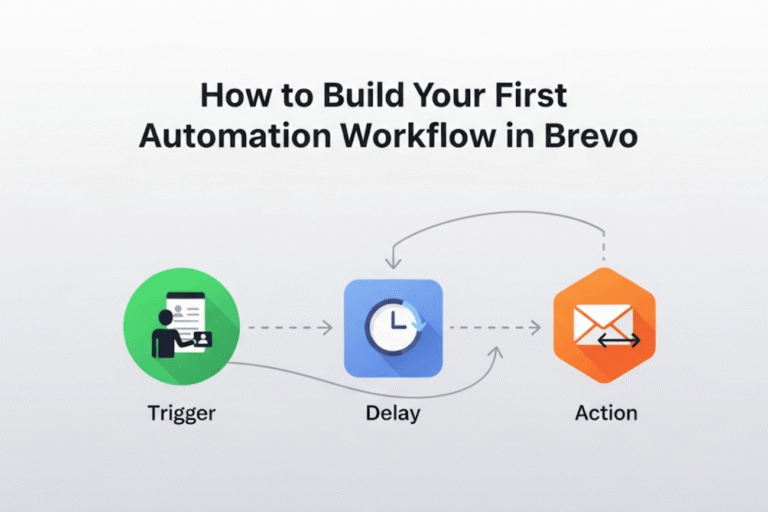
Marketing automation refers to using software tools to automatically trigger, schedule, personalize, and optimize marketing tasks and workflows based on user behavior, data, or triggers. Automation covers more than just emails—it can include sequences, multi-step flows, drip campaigns, lead scoring, sending messages via multiple channels (SMS, WhatsApp, push notifications), and reacting to customer behavior.
Features of marketing automation:
- Behavior-based triggers (abandoned carts, browsing patterns)
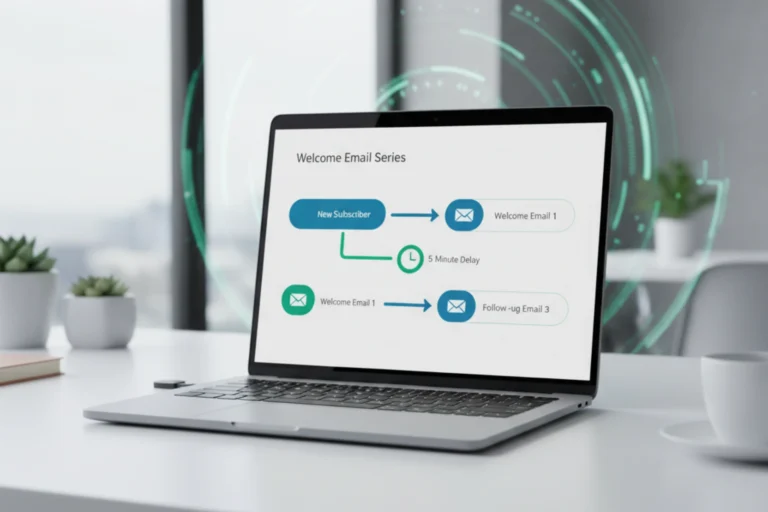
- Multi-step workflows (welcome sequence, re-engagement, onboarding)
- Lead scoring / segmentation that updates dynamically
- Personalized content at scale
- Cross-channel messaging
- Automating repetitive tasks (sending follow-ups, reminders)
Key Differences: Email Marketing vs Marketing Automation
Here are the main distinctions between pure email marketing campaigns and more advanced marketing automation:
| Aspect | Email Marketing | Marketing Automation |
|---|---|---|
| Trigger-based actions | Mostly manual or scheduled sends | Behavior / data triggers |
| Complexity | Simple campaigns like newsletters, promotions | Multi-step journeys and workflows |
| Personalization level | Basic segmentation (demographics, purchase history) | Dynamic content, predictive behavior, AI personalization |
| Channels | Primarily email | Email + SMS + push notifications + more |
| Scalability | Works well for small lists and simpler needs | Suited for large audiences, repetitive tasks, complex funnels |
| Cost & resources | Lower cost, easier to manage manually | Higher cost, more setup time, requires strategic planning |
| ROI potential | Strong, especially for promotions & newsletters | Higher when leveraged (automated triggers, abandonment recovery, lifecycle emails) |
Why Both Matter — And How They Complement Each Other
Just using email marketing without automation limits what you can achieve. But jumping directly into full-blown automation without mastering basics can waste time and resources. Here’s how they complement each other:
- Email marketing builds the foundation: list building, content creation, understanding audiences.
- Marketing automation scales that foundation: turning regular campaigns into behavior-driven journeys that are more relevant and less manual.
- Automation helps improve email marketing metrics like open rates, click rates, conversions.
Real-World Stats in 2025 Showing Impact
To understand how big the gap is between traditional email marketing and automation, here are updated stats:
- Automated email campaigns generate 320% more revenue than non-automated ones.
- Companies using automation see 3-4× higher click-through rates versus broadcast email campaigns.
- Email automation often yields 50-plus percent better open rates and conversion improvements.
- In e-commerce specifically, automated messages (welcome, cart abandonment, post-purchase) account for a large portion of revenue, even though they comprise a small fraction of total email sends.
- Many businesses using automation reduce manual workload, improve segmentation, and see better lead generation and customer retention.
When to Use Only Email Marketing — vs When to Invest in Automation
Here are guidelines to help decide:
Stick with simpler email marketing if:
- You are a startup or sole entrepreneur beginning to build a subscriber list.
- Your budget is small, and you want fast results.
- You send fewer than 2-3 emails/week and don’t have complex customer behaviors to respond to.
- You want to focus first on content quality, deliverability, brand voice.
Opt for marketing automation when:
- You have enough subscribers and customer data (purchase history, behavior).
- You want to send triggered campaigns (abandoned carts, welcome flows, re-engagement).
- You want to use multiple channels, personalize content dynamically, or scale your marketing with fewer manual tasks.
- Your goal is maximizing ROI, reducing churn, improving customer lifetime value.
Best Practices: Combining Email Marketing & Automation for Best Results
To get the highest value, combine both strategies well. Here are best practices:
- Clean and segment your list often — inactive subscribers drag down metrics.
- Start with simple automation workflows: welcome sequence, abandoned cart, post-purchase follow ups.
- Use triggered emails based on behavior (browsing, clicks, purchase).
- Personalize content (include customer name, previous purchase, product recommendations).
- Design mobile-first, responsive emails — most opens now happen on mobile.
- A/B test subject lines, send times, content format.
- Monitor metrics beyond opens: click-through, conversion, revenue per email, unsubscribe, and deliverability.
Choosing the Right Tools & Platforms
To leverage both email marketing and automation properly, you need tools that support:
- Behavior-based workflows
- Segment creation and dynamic content
- Multi-channel messaging (email, SMS, push) if possible
- Real-time data syncing and tracking
- Solid analytics for ROI measurement
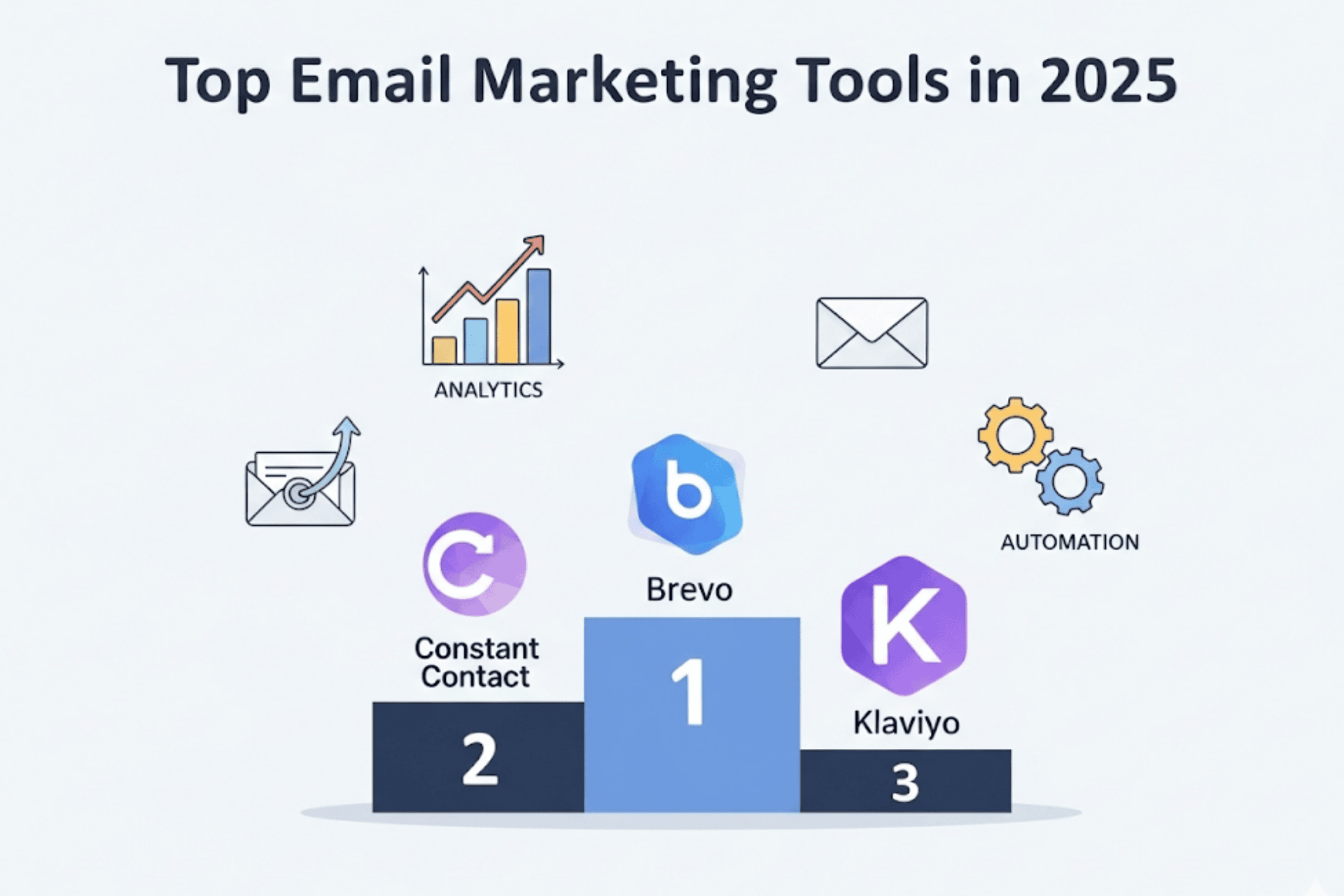
Platforms like Brevo, Klaviyo, Mailchimp, ActiveCampaign, and others differ in their capabilities, pricing, integrations, and ease of use. Match tool to your needs and budget.
Summary & Take-Away
- Email marketing is a core component — sending out broadcasts, newsletters, promotions. It builds the foundation.
- Marketing automation adds intelligence: triggers, personalization, workflows, efficiency, higher ROI.
- In 2025, moving from simple email marketing toward automation is key for businesses that want to scale, improve engagement, and stay competitive.
If you’re starting out, focus on building your subscriber list, sending meaningful emails, and understanding your audience. Once you have data, invest in automations to reduce manual effort and amplify results.
Common Questions:
1. What is the main difference between email marketing and marketing automation?
Short Answer:
Email marketing is about sending campaigns to a subscriber list, while marketing automation manages complete customer journeys across multiple channels.
Explanation:
Email marketing is ideal for newsletters, promotions, and updates. Marketing automation goes further, offering lead scoring, segmentation, CRM integration, and behavior-based workflows. In simple terms, email marketing is a tool, but marketing automation is a system for nurturing leads and boosting conversions.
2. Is marketing automation better than traditional email marketing?
Short Answer:
Marketing automation isn’t always better—it depends on your business needs and goals.
Explanation:
Email marketing is affordable, simple, and effective for startups and small businesses. Marketing automation shines for scaling businesses, offering personalization, advanced analytics, and multi-step campaigns. If you need growth and customer lifecycle management, automation is the better choice. If you’re just starting, stick with email marketing first.
3. Can small businesses benefit from marketing automation, or should they stick to email marketing?
Short Answer:
Small businesses benefit from automation, but email marketing is often the best starting point.
Explanation:
Email marketing tools are affordable, easy to use, and perfect for building a list. Once the business grows and requires personalized journeys, triggered campaigns, or advanced tracking, marketing automation becomes more valuable. Pro tip: Start lean with email marketing and scale into automation as your business evolves.
4. Do I need both email marketing and marketing automation for my business?
Short Answer:
You don’t always need both—most businesses start with email marketing, then shift to automation as they grow.
Explanation:
Many companies use email marketing for newsletters and promotions while adding automation for lead nurturing, customer retention, and multi-step workflows. The best approach is to start with simple campaigns and upgrade to automation when your business requires deeper personalization.
5. Which platforms offer both email marketing and marketing automation features?
Short Answer:
Brevo, HubSpot, Klaviyo, ActiveCampaign, and Mailchimp (advanced plans) combine email marketing with automation.
Explanation:
These platforms allow businesses to start with basic email campaigns and expand into automation features like segmentation, workflows, and multi-channel campaigns. This flexibility helps companies grow without switching providers. Choosing the right tool depends on your budget, goals, and customer journey complexity.

Hi, I’m Jawad Khalid worked in Digital Marketing and as a content manager. I’ve been testing and reviewing digital marketing software since 2015. My main expertise is taking complex tools and breaking them down into simple, practical reviews. Here, I focus on putting platforms like Brevo through their paces for our own projects to see how they truly perform. I’m excited to share my findings and support you on your marketing journey!